

What is SarvaLinks?
India's First AI-Powered National Workforce Transformation Ecosystem
Building the Digital Foundation of India's Workforce.
India has built powerful digital infrastructure for identity, payments and public services. The next frontier is Workforce Transformation.
India possesses one of the world's largest workforces, millions of enterprises, thousands of educational institutions and an enormous pool of students, professionals, independent workers and emerging talent.

The Connected Ecosystem
Connecting India's Workforce Systems
Yet the systems that shape a person's workforce journey — education, skills, opportunities, employers, internships, careers, workforce demand and intelligence — often operate across disconnected platforms and institutions.
SarvaLinks is being built to connect these elements into one intelligent national ecosystem.
SarvaLinks is India's First AI-Powered National Workforce Transformation Ecosystem, bringing Private Jobs, Government Jobs, Manpower, Internships, Campus Recruitment and Entrance Exams together with candidates, employers, students, institutions and professionals in one connected digital workforce ecosystem.
Powered by AI, workforce intelligence and digital career infrastructure, SarvaLinks is designed to make opportunities more accessible, connections more intelligent and India's workforce more capable, productive and future-ready.
The Ecosystem at a Glance
0
AI Engine
0
Connected Participant Groups
0
Layers of the Solution Architecture
0
Workforce Exchanges
0
AI Engine
0
Connected Participant Groups
0
Layers of the Solution Architecture
One National Ecosystem, Six Pathways
Six Exchanges. One AI Engine.
SarvaLinks brings together six major workforce exchanges, connected by a common intelligence layer, into one national ecosystem.
Government Job Discovery Exchange
Private Job Exchange
Internship Exchange
Campus Recruitment
Manpower Exchange
Entrance Exam Exchange
Government Job Discovery Exchange
Private Job Exchange
Internship Exchange

Campus RecruitmentColleges connected to employers
Manpower ExchangeSkilled and semi-skilled workforce
Entrance Exam ExchangeExams, prep and admissions
India's Workforce Challenge Is Bigger Than Employment
India Does Not Merely Have an Employment Problem. It Has a Workforce Infrastructure Problem.

India's employment challenge cannot be solved simply by creating another place where vacancies are listed and applications are submitted.
The deeper challenge is the fragmentation of the entire workforce ecosystem.
A student may spend years preparing for a career without clearly understanding which capabilities are valuable or where those capabilities can create opportunities.
A graduate may possess valuable skills but remain invisible to organisations that need them.
An employer may need capable people but struggle to discover the right talent.
A college may have talented students but limited access to employers beyond its geographical or institutional network.
A professional may have valuable expertise but struggle to consistently discover relevant projects, assignments or opportunities.
A training organisation may develop useful capabilities but remain disconnected from actual workforce demand.
Government opportunities, private-sector opportunities, internships, flexible work, education, skills and workforce information may exist across different systems.
The result is a fragmented workforce journey. India therefore needs more than additional employment platforms.
It needs a more connected National Workforce Ecosystem.
SarvaLinks has been conceived to address this structural challenge.
The Problems Are Connected — So the Solution Must Be Connected
From Individual Employment Problems to a National Workforce Challenge
Unemployment is only one visible outcome of a much larger system. India simultaneously faces:
Unemployment
Underemployment
Skill mismatch
Talent visibility gaps
Education-to-employability gaps
Fragmented opportunity discovery
Unequal access to opportunities
Disconnected employers and talent
Limited industry-academia connectivity
Fragmented internship opportunities
Geographically concentrated campus opportunities
Disconnected freelance and contract workforce
Fragmented government opportunity discovery
Limited workforce intelligence
Weak connection between skills and market demand
Insufficient continuous career development
Uneven access to workforce technology


These problems don't sit in isolation — they reinforce one another.
| When… | Then… |
|---|---|
| Opportunities are difficult to discover | People remain underutilised |
| Capabilities are difficult to discover | Organisations struggle to access talent |
| Education is disconnected from industry | Employability suffers |
| Skills are disconnected from market demand | Training may not translate into economic value |
| Workforce information is fragmented | Individuals, organisations and policymakers have less visibility for better decisions |
Therefore, the objective cannot be simply to improve one transaction.
The objective must be to improve the workforce system itself.
From Fragmented Systems to One Workforce Ecosystem
Connecting the Elements of India's Workforce Journey
Today, different parts of the workforce journey often exist in different places.
EducationColleges, universities and institutions
→
SkillsTraining and skill development
→
Career DiscoveryGuidance and professional networks
→
OpportunitiesGovt, private, internships and flexible contracts
→
Workforce ParticipationEmployment, projects and freelance assignments
→
Career DevelopmentContinuous learning and progress
→
Workforce IntelligenceDeep trends and skill observables
EducationColleges, universities and institutions
SkillsTraining and skill development
Career DiscoveryGuidance and professional networks
OpportunitiesGovt, private, internships and flexible contracts
Workforce ParticipationEmployment, projects and freelance assignments
Career DevelopmentContinuous learning and progress
Workforce IntelligenceDeep trends and skill observables
SarvaLinks is designed to connect these stages through a common digital foundation.
The objective is not simply to connect people with opportunities. The objective is to connect the entire workforce lifecycle.
A New Category of Digital Infrastructure
From Employment Platforms to National Workforce Infrastructure
A conventional employment platform primarily facilitates a transaction:
The difference is fundamental.Employer→Opportunity→Candidate→Application
SarvaLinks is designed around a broader ecosystem:
Discover→Understand→Connect→Match→Develop→Participate→Transform→Generate Intelligence
| Dimension | Conventional Employment Platforms | SarvaLinks |
|---|---|---|
| Primary focus | Employment transactions | Workforce ecosystem |
| Opportunity discovery | Search and listings | Intelligent discovery |
| Workforce journey | Primarily employment-focused | Education to career to continuous development |
| Participants | Limited stakeholder groups | Connected workforce ecosystem |
| Intelligence | Primarily search/filter based | AI-powered workforce intelligence |
| Skills | Usually secondary | Core workforce dimension |
| Education | Often separate | Connected to workforce pathways |
| Internships | Separate ecosystems | Integrated workforce exchange |
| Campus connectivity | Limited or specialised | National campus ecosystem |
| Flexible workforce | Separate platforms | Integrated manpower ecosystem |
| Geographic visibility | Usually list-based | National map-based opportunity discovery |
| Workforce intelligence | Limited | National workforce intelligence layer |
| Long-term objective | Facilitate transactions | Workforce transformation |
SarvaLinks therefore seeks to occupy a broader category:
Online Recruitment PlatformNational Workforce Infrastructure
Six Workforce Exchanges. One National Ecosystem.
Six Pathways Connecting India's Workforce
SarvaLinks brings together six major workforce exchanges designed to address different parts of India's opportunity ecosystem.

01
Government Job Discovery Exchange
Bringing government employment opportunities into a more unified environment for discovery and participation while preserving the role of official recruitment authorities.

02
Private Job Exchange
Connecting India's employers and workforce across enterprises, industries and regions, with particular emphasis on bringing India's vast MSME ecosystem into the digital workforce mainstream.

03
Internship Exchange
Creating a national bridge between students, educational institutions and organisations so that practical experience becomes a more accessible part of the education-to-work journey.

04
Campus Recruitment Exchange
Connecting employers with students and institutions beyond traditional geographical and institutional boundaries, helping more talent become visible to organisations.

05
Manpower Exchange
Creating a structured national environment for freelancers, consultants, professionals, contractors and other forms of flexible workforce participation.

06
Entrance Exam Exchange
Bringing examination discovery, preparation and participation into a broader workforce and career ecosystem.
Six Exchanges. One AI Engine. One National Workforce Ecosystem.
The six-exchange architecture is central to the SarvaLinks solution framework.
From Opportunity Discovery to Workforce Transformation
The Workforce Journey Does Not End With Employment
SarvaLinks is designed around a continuous workforce lifecycle.
Education
→
Assessment
→
Career Direction
→
Skill Development
→
Internship / Experience
→
Opportunity
→
Workforce Participation
→
Professional Growth
→
Continuous Learning
→
Workforce Intelligence
Education
Assessment
Career Direction
Skill Development
Internship / Experience
Opportunity
Workforce Participation
Professional Growth
Continuous Learning
Workforce Intelligence
The objective is to move beyond the traditional idea of a single employment transaction.
A person's workforce journey can evolve continuously.
A student can become a professional.A professional can become a consultant.A worker can acquire new skills.An organisation can discover new capabilities.An institution can strengthen its connection with industry.
Workforce transformation therefore becomes a continuous process rather than a one-time event.
Democratizing Access to Workforce Opportunity
World-Class Workforce Infrastructure Should Not Be Available Only to Large Organisations
Large Enterprises
Can invest in sophisticated HR teams, recruitment systems, databases, assessments, branding and technology.
Many Smaller Organisations
Cannot — creating an uneven workforce ecosystem.
India's MSME sector represents an enormous source of economic activity and employment, yet smaller organisations can face financial, technological and visibility barriers when participating in modern workforce systems.
SarvaLinks is designed around a different principle:
World-class workforce infrastructure should not be available only to world-class enterprises.
The platform is designed to lower barriers to participation and help bring more employers and workforce participants into the digital mainstream.
The broader objective is to make workforce infrastructure more accessible, affordable and inclusive across India's economic landscape.
Making India's Hidden Talent Visible
Talent Should Not Depend on Geography, Institution or Social Visibility
India's talent is distributed far beyond major cities and famous institutions. Valuable capabilities exist in:
Tier-2 and Tier-3 cities
Rural and semi-urban regions
Smaller colleges
Emerging institutions
MSMEs
Independent professionals
First-generation graduates
Experienced professionals outside traditional networks
Traditional opportunity systems can sometimes favour visibility over capability.
SarvaLinks is designed to make workforce capabilities discoverable through dimensions such as:
SkillsExperienceEducationAssessmentsCapabilitiesPerformanceLocationInterests
The fundamental principle is simple:
Talent should not have to live in the right city, attend the right college or know the right person to become visible.
This is particularly important for building a more inclusive Indian workforce.
Bridging Education and the World of Work
Education Should Not Exist Separately From the Workforce
Every year, millions of young people move from education toward professional life. Yet the transition can remain fragmented — students face:
Qualifications without sufficient practical exposure
Degrees without industry connectivity
Skills without visibility
Knowledge without workplace experience
Aspirations without clear career pathways
SarvaLinks is designed to connect:
Connection Step 01 of 07
The Internship Exchange is designed to create a structured bridge between learning and practical experience.
The Campus Recruitment Exchange is designed to expand access to organisations beyond traditional geographical and institutional boundaries.
The larger objective is to make the transition from education to employability to workforce participation more connected.

From Information to Intelligence
AI as the Intelligence Layer of the Workforce Ecosystem
Digitisation creates enormous amounts of information.
But more information does not automatically create better decisions.
The real question is:
"What is relevant to me?"
SarvaLinks is designed to use Artificial Intelligence and connected workforce data to progressively understand relationships between:
01People
02Skills
03Education
04Experience
05Interests
06Career aspirations
07Organisations
08Industries
09Opportunities
10Workforce demand
Search for an opportunity
Discover opportunities that are relevant to you.
AI can become the intelligence layer that helps filter, rank, recommend, match and personalise the workforce experience.
This is one of the fundamental shifts from a listing-oriented model toward an intelligence-centric workforce ecosystem.
Connecting Workforce Demand With Workforce Capability
From "Who Is Available?" to "Who Is Relevant?"

An organisation's requirement is not simply a designation. A capability requirement can involve:
SkillsExperienceEducationIndustry knowledgeLocationAvailabilityBehavioural attributesCareer context
At the same time, a person's potential cannot always be fully represented by a conventional resume.
SarvaLinks is designed to progressively build relationships between workforce capability and workforce demand.
What organisations need
What people can offer
This can help create a common intelligence layer between what organisations need and what people can offer.
The long-term objective is better visibility, better matching and better workforce decisions.
A National Workforce Intelligence Layer
Understanding India's Workforce as a Connected System
India generates enormous amounts of workforce-related information. Yet information about:
People
Skills
Opportunities
Employers
Industries
Geography
Salaries
Workforce demand
Workforce availability
can remain distributed across many systems.
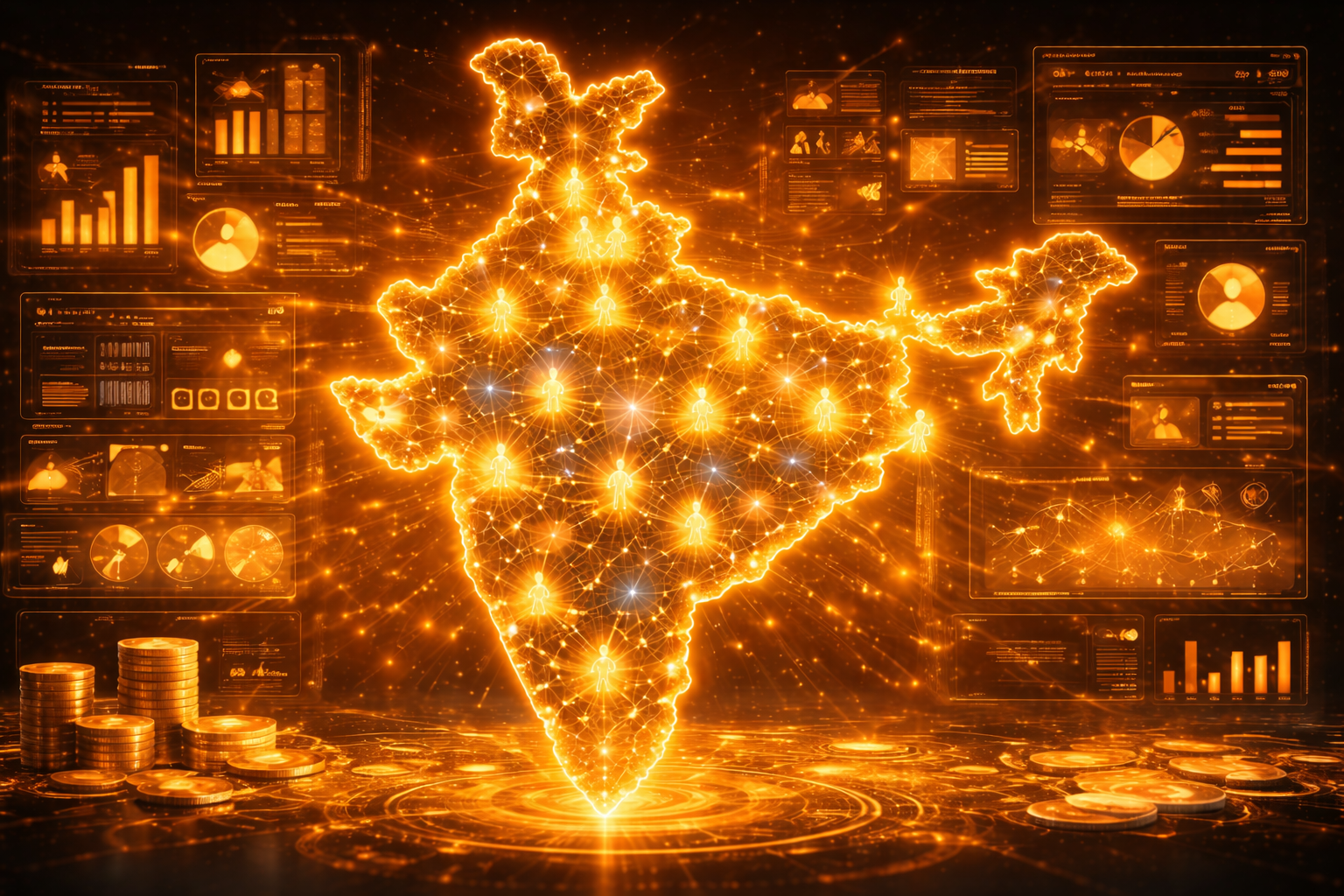
SarvaLinks is designed to progressively create a National Workforce Intelligence layer.
Over time, this can enable deeper understanding of:
Employment trendsSkill demandWorkforce availabilityRegional workforce patternsIndustry demandSalary intelligenceEmerging opportunitiesSkill shortagesCareer trendsWorkforce readiness
The long-term objective is to transform workforce information into workforce intelligence that can support better decisions by individuals, organisations, institutions and, where appropriate, policymakers.
The SarvaLinks Solution Architecture
Five Layers. One Workforce Ecosystem.
The SarvaLinks ecosystem can be understood through five interconnected layers.
Layer 1
Opportunity
Discover: Government opportunities, Private-sector opportunities, Internships, Campus opportunities, Examination opportunities, Flexible workforce opportunities.
Layer 2
Participation
Connect: Candidates, Employers, Students, Institutions, Professionals, Training providers, Workforce organisations.
Layer 3
Intelligence
Understand: Skills, Careers, Workforce demand, Talent, Industries, Opportunities.
Layer 4
Transformation
Enable: Better employability, Better workforce decisions, Better skills, Better opportunity access, Better workforce productivity, Better career development.
Layer 5
National Intelligence
Progressively enable: Workforce research, Rankings, Workforce dashboards, State intelligence, District intelligence, Industry intelligence, Skills intelligence, Policy-oriented insights.
Together, these layers create the foundation of a continuously evolving National Workforce Transformation Ecosystem.
One Ecosystem. Many Participants. One National Purpose.
Connecting Everyone Who Contributes to India's Workforce
SarvaLinks is designed for the complete workforce ecosystem.
Citizens, Candidates & Professionals
Discover opportunities, understand career possibilities, develop capabilities and participate in India's workforce.
Employers & Enterprises
Discover talent, access workforce capabilities and participate in an intelligent national workforce ecosystem.
Students
Discover careers, internships, skills and pathways from education toward productive participation.
Colleges & Universities
Connect students with employers, internships, industry and wider workforce opportunities.
Freelancers, Consultants & Independent Professionals
Make capabilities more visible and discover opportunities for projects, assignments and economic participation.
Government & Public Institutions
Access the potential of connected workforce infrastructure, employment information and workforce intelligence.
Industry & Organisations — Connect workforce demand with talent, capabilities, institutions and emerging skills.
The objective is not to create separate systems for every participant.
The objective is to make them part of one continuously connected workforce ecosystem.
The SarvaLinks Workforce Flywheel
The Ecosystem Becomes More Valuable as Participation Grows
SarvaLinks is designed around a powerful network effect.
Ecosystem Flywheel Sequence
ACTIVE STEP: 01
More People
A growing candidate pool of students, graduates, and professionals creates a comprehensive national database of capabilities.
Every meaningful interaction has the potential to strengthen the ecosystem.
More participation creates more connections.
More connections create richer workforce intelligence.
Richer intelligence can improve discovery and matching.
Better outcomes can attract more participants.
This creates a continuously strengthening Workforce Transformation Ecosystem.
From Fragmentation to a Stronger Economy
The SarvaLinks Transformation
The transformation SarvaLinks seeks to enable can be expressed simply:
Transformation Step 01 of 09
This is the larger purpose behind the technology.
Not Merely This
SarvaLinks is not being built merely to increase the number of people using a digital platform.
But This — The Real Ambition
It is being built with the ambition to improve how India's workforce discovers opportunities, develops capabilities, connects with organisations and contributes to economic activity.
Building the Digital Foundation of India's Workforce
Workforce Transformation Is India's Next Digital Frontier
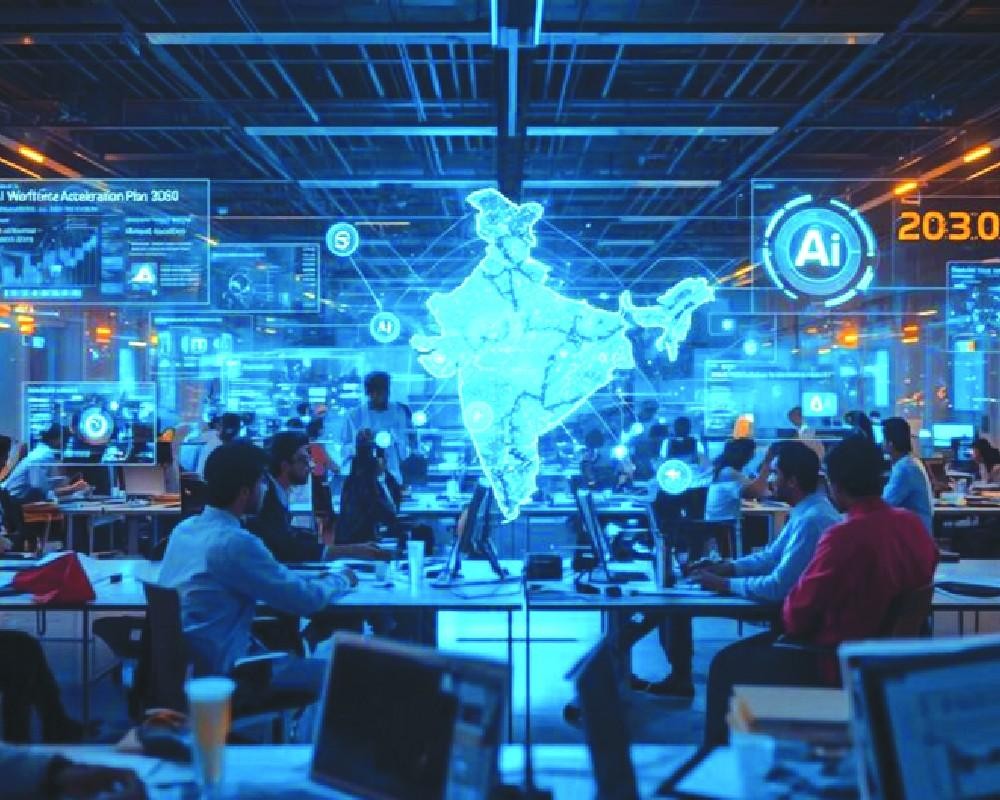
India's economic transformation will depend not only on capital, physical infrastructure and technology. It will also depend on:
The quality of its people. The capabilities of its workforce. The productivity of its workers. The mobility of its talent. The adaptability of its workforce. The ability of organisations to access the right capabilities.
A stronger workforce can contribute to:
Stronger businesses
More productive industries
Better employment outcomes
Greater entrepreneurship
Better utilisation of skills
Greater economic participation
Stronger national competitiveness
SarvaLinks therefore views Workforce Transformation not as a narrow employment initiative, but as an important component of India's broader development journey.
Toward Developed India @2047
India's Next Digital Transformation Frontier

India has demonstrated how digital infrastructure can transform entire sectors of society and the economy. The next frontier is the workforce.
As India progresses toward its long-term national development aspirations, the quality, productivity and global competitiveness of its workforce will become increasingly important.
SarvaLinks has been conceived with the ambition of contributing to this next layer of digital transformation:
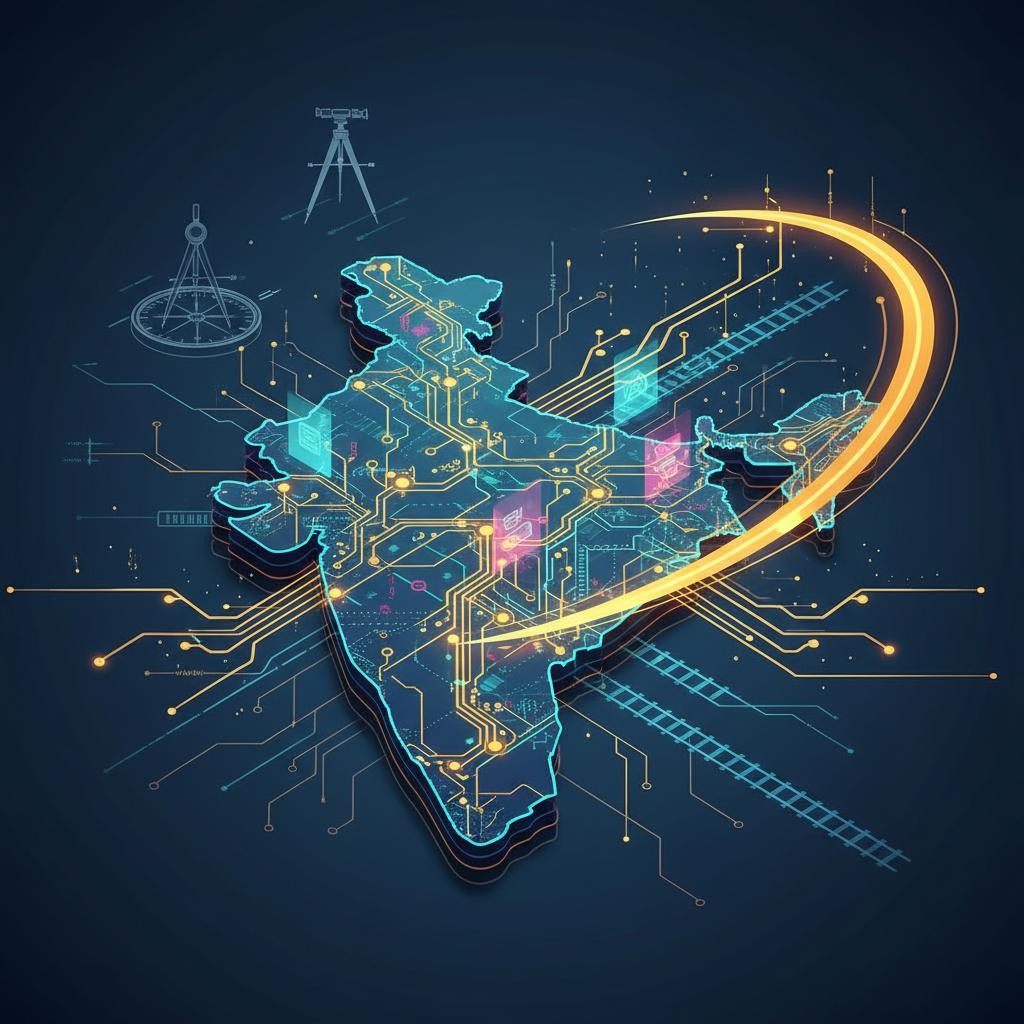
Workforce Transformation
By connecting people, opportunities, employers, education, skills and workforce intelligence through one evolving ecosystem, SarvaLinks seeks to contribute to a stronger workforce and a more productive economy.
The ambition is not simply to build another technology platform. It is to help build the digital foundation through which India's human potential can become a stronger economic force.
The SarvaLinks Promise
India's Greatest Workforce Asset Is Its People
At the heart of SarvaLinks is a simple belief: India's greatest workforce asset is its people.
The challenge is not merely to create more opportunities. The challenge is to make better connections possible.
The right opportunity should reach the right person.
The right capability should reach the right organisation.
The right skills should reach the right industry.
The right intelligence should reach the right decision-maker.
And more of India's human potential should become productive potential.
This is the promise at the heart of SarvaLinks.
What Is SarvaLinks?
One Definition. One New Category.
And if it needs to be explained even more simply:
✕
We are not building another place to find a job.
✓
We are building the digital infrastructure through which India's workforce can discover, connect, develop, transform and contribute its full potential.
The Strategic Shifts of SarvaLinks
Value Shift
Employment Discovery↓Workforce Transformation
Structural Shift
Fragmented Systems↓Connected Infrastructure
Economic Shift
Human Potential↓Productive Potential
Explore the SarvaLinks Ecosystem
One Ecosystem. Multiple Pathways. One National Mission.
Explore the Six Workforce Exchanges
Discover the different pathways through which people and organisations can participate in the SarvaLinks ecosystem.
Explore the Exchanges →For Candidates & Professionals
Discover opportunities, careers, skills and workforce pathways.
Explore for Candidates →For Employers
Discover talent and access a connected national workforce ecosystem.
Explore for Employers →For Students & Institutions
Connect education with internships, industry and future workforce opportunities.
Explore for Students & Institutions →Explore Workforce Transformation
Understand how SarvaLinks seeks to move beyond employment toward long-term workforce development, productivity and national workforce intelligence.
Explore Workforce Transformation →